

When it comes to elevating your stage’s lighting and design elements, accessibility is the name of the game. The easier you can get to your equipment, the more efficient and precise the adjustments. That can make for a visually engaging spectacle that brings your audience closer to a performance or show.
Tension wire and pipe grids are overhead systems that allow you to elevate workspaces above the stage floor. Learn about each type and how you can incorporate them into your theatre rigging.
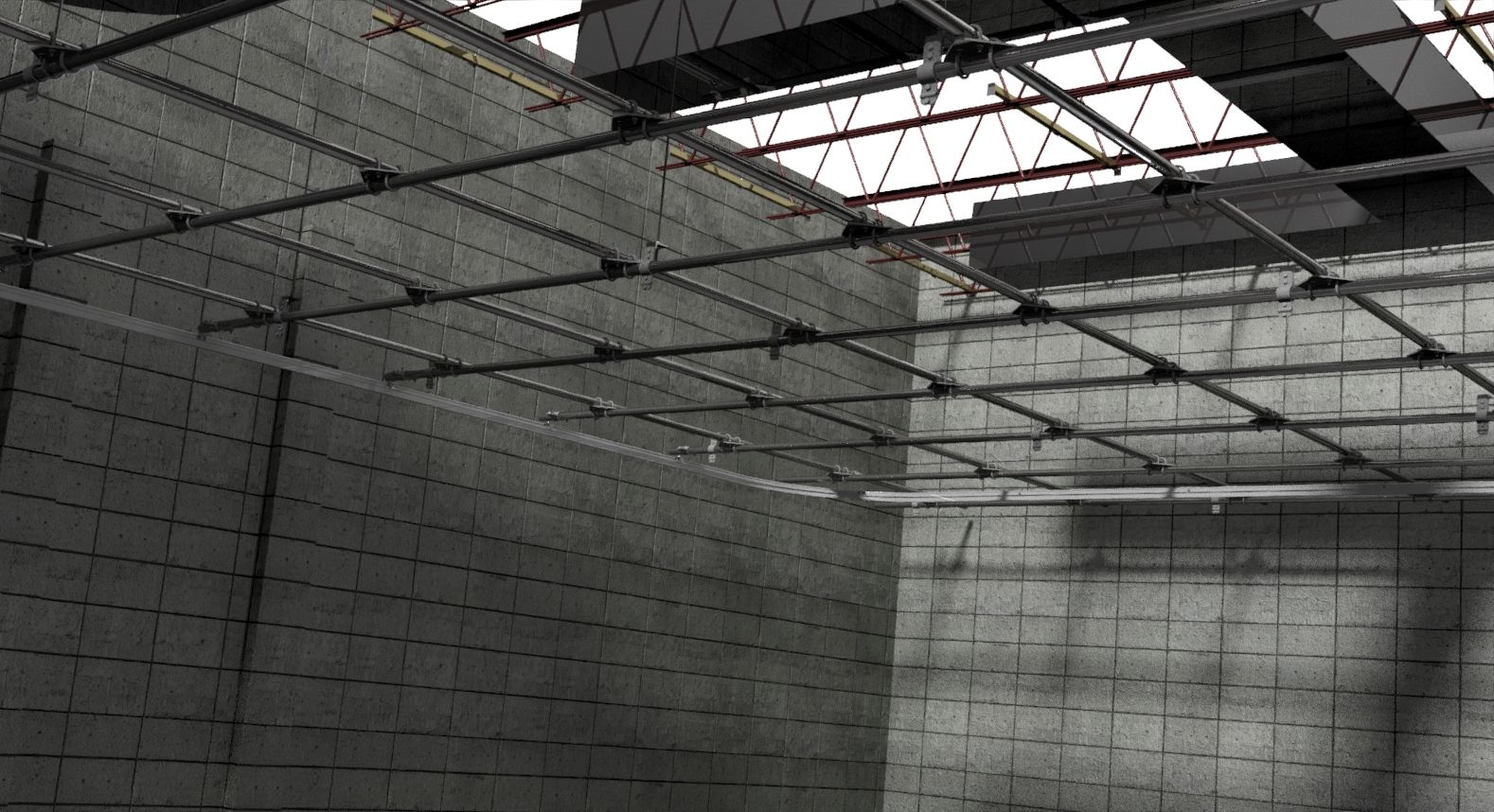
What is a Tension Wire Grid?
A tension wire grid is a platform constructed from tensioned steel cables that form modular panels. Because the wires are pulled taut, they can bear a load, creating a rigid, workable surface for technicians. That allows stagehands to get to lighting, suspended elements and rigging points with ease to make necessary adjustments for performances. Their walkable surface eliminates the need for lifts and ladders because tension wire grids are secured to rigging structures.
One of the perks of using tension wire grids is that you can direct lighting and speakers through them without worrying about visual and auditory obstruction. The thin mesh allows you to look directly onto the performance area and position your equipment where it’s needed.
Common Stage Applications for Tension Wire Grids
Black box theatres: This type of theatre is suitable for a wide variety of performance arrangements. Tension wire grids can cover the entire ceiling or a portion of it, regardless of the design on the ground. They allow lighting designers and riggers to access the overhead elements without the constraints of fixed pipes.
Performing arts centers: These performance spaces are more technically demanding, so they require a solution that can adapt to production diversity. Tension wire grids can support heavy production demands and allow for quick design turnarounds when integrated with motorized rigging systems.
School auditoriums: The durability of tension wire grids elevates safety measures, which is crucial in school theatres. They can double as fall prevention equipment and have controlled access points. Wire tension grids may be more cost-effective for school stages where budgets are limited and flexibility is essential.
Multipurpose spaces: Whether you’re outfitting a convention center, ballroom or community space, tension wire grids provide you with a flexible overhead system that doesn’t require installation adjustments to accommodate different events.
What is a Pipe Grid?
A pipe grid is a matrix of steel or aluminum pipes arranged in a square or rectangular pattern that’s suspended from the ceiling. They provide structure and support for suspended elements and are spaced in intervals to accommodate different overhead configurations. You can hang lighting fixtures, sound equipment, drapery and other hardware from pipe grids. They’re common in theatres and performance spaces, making them a suitable option for most rigging and technical teams. Pipe grids hang at a fixed elevation and must be accessed via a ladder, lift or catwalk.
Common Stage Applications for Pipe Grids
- Proscenium stages: You can use pipe grids in proscenium stages to manage overhead rigging or combine motorized and traditional counterweight and fly systems. They can also substitute fly systems elements in smaller auditoriums.
- TV studios: Pipe grids can cover the entire ceiling of a studio, providing uniform fixtures for lighting, cameras and microphones. Pipe grids allow for dense configurations while providing easy access for quick changes.
- Motorized rigging: Integrating pipe grids into motorized systems creates a dynamic setup that you can lift or lower with speed and precision. You can even pre-program positions, making it simple to move and adjust complex lighting projects.
Can You Use Tension Wire and Pipe Grids Together?
The beauty of these two grid systems is that you can often combine them to get the best of both worlds. While tension wire grids provide flexibility in design and direct access for technicians, pipe grids offer stability and higher load-bearing capabilities.
You can reconfigure both options to customize your rigging design for a unique visual experience. Pipe and tension wire grids can share the same structural framework that hangs from your ceiling or roof. Typically, tension wire grids are positioned higher than pipe grids, but you can still pass and connect suspended elements through the mesh. That gives you overhead accessibility with plenty of rigging flexibility.
Expert Rigging Guidance from Tiffin Scenic Studios
Whether you’re looking for a single solution or a complex creation, Tiffin Scenic Studios can accommodate your theatre design. Our expert team will assess your space and provide recommendations on rigging, drapery and automation to enhance your grid setup. We offer tension wire and pipe grids and a variety of rigging accessories so you can pull off innovative performances. Contact us to learn about our services.