
Dead Hung Stage and Theatre Rigging
Tiffin Scenic Studios has decades of experience providing rigging solutions for the entertainment industry. We’re renowned for our expertise in dead hung rigging tailored for stages and theatres.
We meticulously design our systems to optimize space, enhance safety and streamline operations.
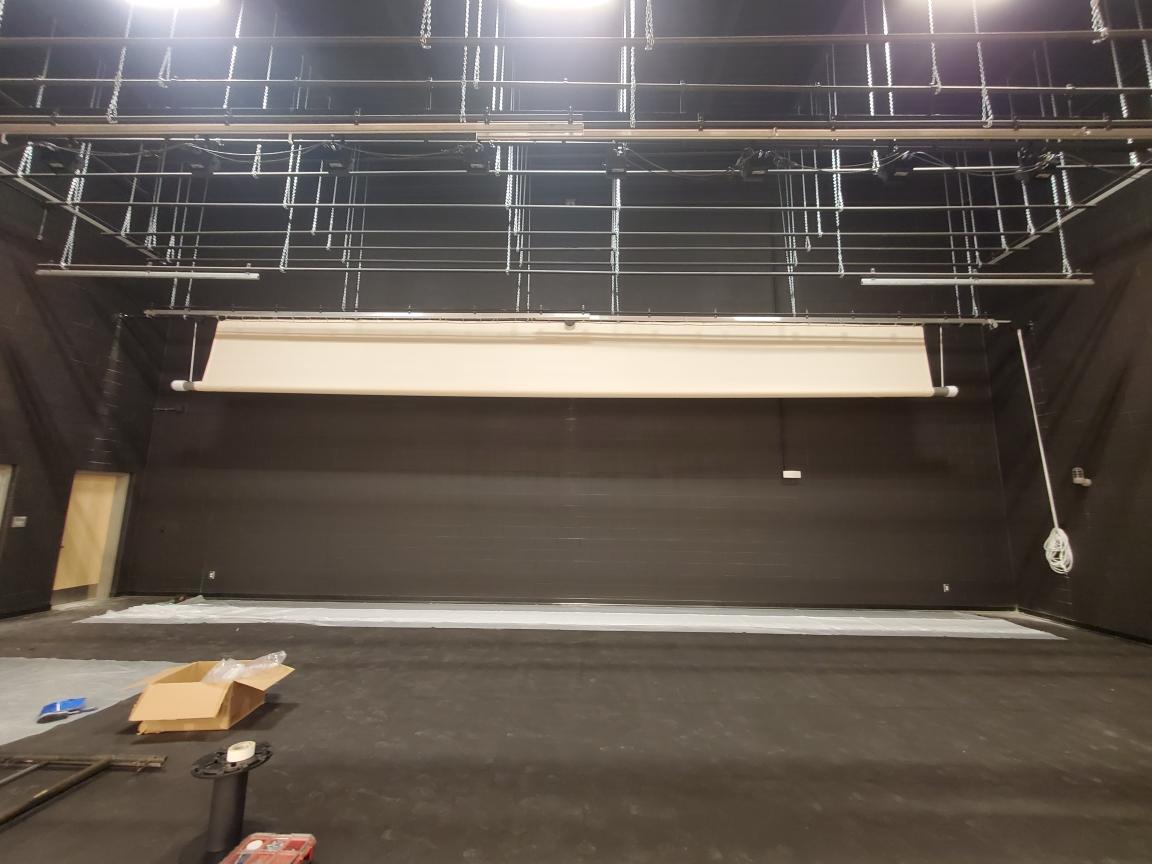
Our company furnishes dead hung rigging for facilities that don’t have fly lofts. We also supply pipe battens or pipe grids that suspend the dead hung connections, allowing drapery to travel crosswise.
Technical Specifications
Our expertise lies in delivering reliable rigging systems that make the most of any given space, allowing for seamless production execution.
Tiffin Scenic Studios dead hung rigging specifications include:
- Load capacity: We offer customizable stage and theatre rigging solutions to suit load capacities ranging from light-duty to heavy-duty options.
- Materials: Our systems utilize robust materials including steel and aluminum alloy to provide durability and longevity.
- Dimensions: We accommodate diverse staging needs by creating rigging tailored specifically to your stage dimensions and configurations.
- Installation: Our certified technicians adhere to industry safety standards and regulations to ensure seamless integration into your existing infrastructure.
Types of Suspensions for Dead Hung Rigging
Suspensions connect hanging fixtures to a rigging system above a stage or theatre space. They can be paired with dead hung rigging to provide stable support for stage elements and safe movement during performances.
Common types of suspensions for dead hung rigging include fixed point attachments, adjustable chain motors and counterweight systems. Each offers unique advantages in terms of flexibility, load capacity and adjustment.
Bar Joists
A bar joist is a structural component used to reinforce rigging systems. Bar joists create a sturdy framework to suspend rigging equipment and scenic features. Their strength and load-bearing capabilities make them ideal for supporting the weight of lighting fixtures, curtains and other production equipment.
We attach our saddle clip-type connections compression plates and Unistrut to utilize the panel point strength in our bar joists.
I-Beams
An I-beam is a steel beam with a cross-section that resembles the letter “I.” They provide structural integrity, making it ideal for suspending rigging equipment, scenery, lighting and curtains in theatres and stages. I-beams have high load-bearing capabilities to help ensure crew safety during overhead rigging installations and performances.
Tiffin Scenic Studies accommodates many types of suspension, including dye cut, adjustable beam clamps and compression clamps.
Concrete Anchors
A concrete anchor is a fastening device embedded into a structure to establish secure attachment points for rigging equipment. Concrete anchors fasten rigging systems firmly to the stage or theatre structure. They’re designed to create stability in overhead installations during performances.
We offer a variety of attachable concrete anchors and will assess your facility to determine which style suits your specific requirements.
Dead Hung Connections
Dead hung connections are fixed points or attachments used in rigging setups. These components can be used to lock scenery and lighting fixtures in place above the stage. Dead hung connections establish a consistent position and are intended to stay stationary during production execution.
Benefits of Using Dead Hung Stage and Theatre Rigging
Dead hung rigging is essential in stage and theater production because it provides stability that can enhance the overall performance. These systems are engineered to support and secure lighting fixtures, speakers, backdrops, drapery and other elements that enhance the aesthetic appearance of your performance space.
Benefits of dead hung rigging include:
- Versatility: Dead hung rigging systems suit a wide variety of production systems and stage configurations.
- Safety: Securing suspended equipment above a performance space helps prevent accidents and protects performers, crew and audience members.
- Efficiency: Dead hung rigging simplifies the setup and teardown processes. That enables your crew to complete quick and efficient changes between scenes and minimize downtime during performances.
- Precision: Stage and theatre professionals can achieve the exact aesthetic and technical requirements of each production with precise control by using dead hung rigging.
Our Work