

Play with fire, and you’ll get burned – especially if your stage curtains aren’t inspected annually.
You have crew and audience member safety to consider and structural elements to protect, which is why you shouldn’t skimp on inspections. Contacting your local fire marshal to schedule an inspection is the first step. Here’s what to expect next.
The Importance of Stage Fire Curtains
Fire curtains in theatres not only influence the presentation of a performance, but they also act as a physical barrier between attendees and open flames and smoke if a fire breaks out. That not only protects people from heat, but also gives them more time to evacuate.
Flame-retardant coatings are applied or chemically bonded to these curtains, or you can choose drapery fabric that’s inherently resistant to ignition. They’re deployed via a fusible link that melts when exposed to a certain temperature. You can also release fire curtains manually.
Why Fire Curtain Inspection is Essential
Fire-resistant coatings can lose their effectiveness over time, and dust and oil can affect flame retardancy. Regular inspections allow professionals to spot signs of wear and tear that could compromise the integrity of your theatre.
Inspections also address:
Code compliance: Fire curtains must meet building code and National Fire Protection Association (NFPA) requirements. A professional inspection will identify issues that violate those regulations, specifically NFPA 705 and 701.
Insurance and liability: Failing to address issues revealed by a fire inspection could result in fines and legal action if there’s an injury or fatality. Adhering to inspection recommendations reduces those risks and provides evidence if you file an insurance claim.
Expenses: It’s significantly cheaper to fix small mechanical issues like frayed cables and degraded fire curtain coatings than it is to rebuild a burned-down theatre. You can address minor issues before they become more costly problems that would sideline your production as well.
How Often Should Fire Curtains Be Inspected?
Regardless of the type of flame-retardant stage curtains you have in your facility, you should schedule an annual NFPA 705 field test to determine if any issues have developed. If an inspector finds signs of degradation, they’ll recommend an NFPA 705 laboratory test of the material under controlled conditions.
What to Expect During a Fire Curtain Inspection
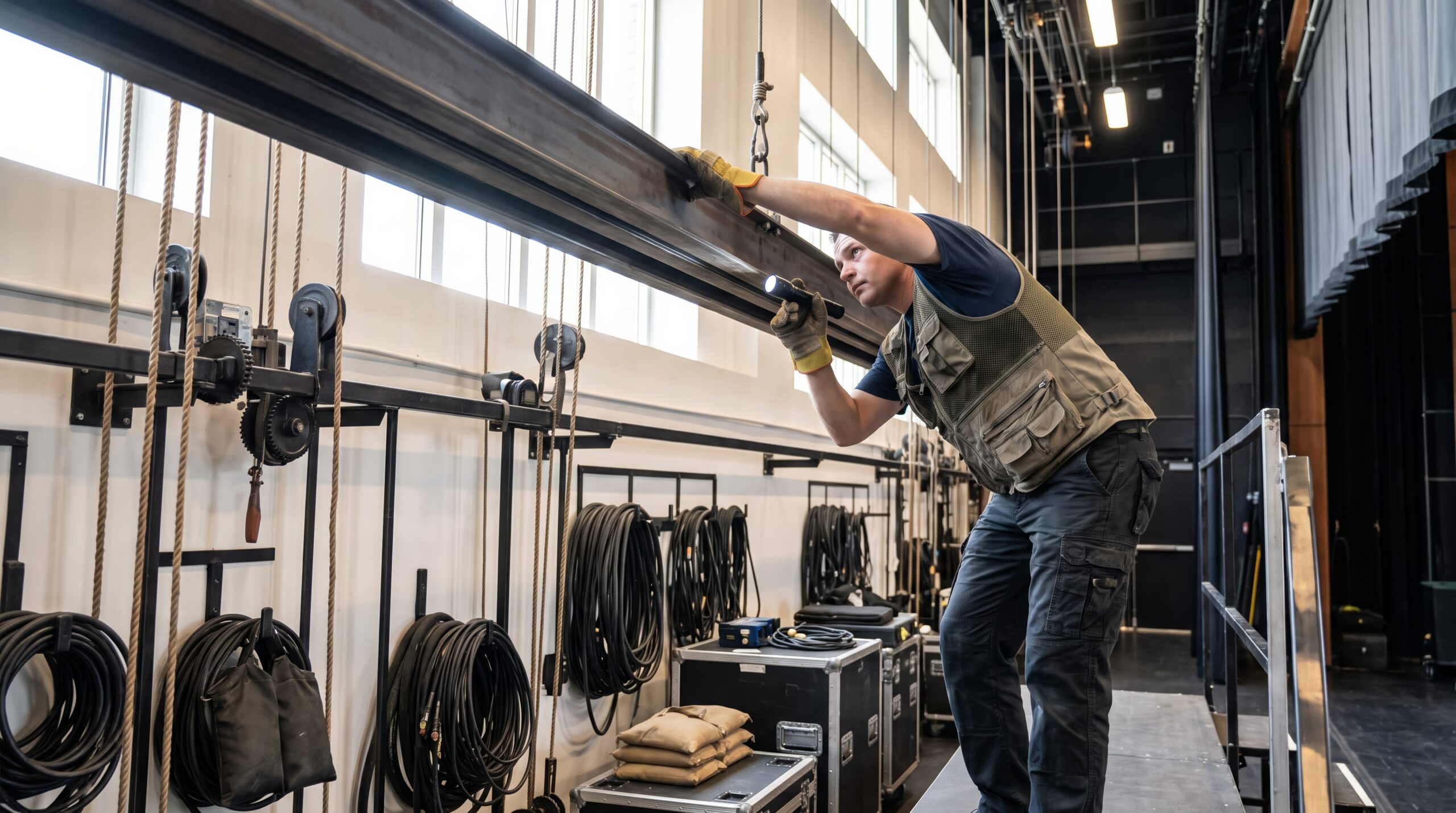
Visual and mechanical checks: An inspector will look for tears, fraying, water damage and fabric degradation. They will also examine the structural components, including curtain tracks, to identify potential obstructions and warping. It’s crucial to verify the seals are intact to ensure they create a proper barrier when deployed.
Fusible link and release test: The heat-activated fusible link must be tested during every inspection to verify it functions properly and isn’t damaged. You’ll also need to trigger manual release mechanisms to confirm curtains drop completely and their descent time meets set standards. Your inspector will ask you to re-arm your fire curtain system afterward.
Documentation and certification: You should update your documents after each inspection, including the professional’s name and qualifications, specific findings, corrective actions and timeline for resolutions. You’ll receive a certificate or tag that you should keep in your on-site records.
Fire marshal review: Depending on the jurisdiction, you may need to contact the fire marshal to sign off on your inspection findings.
Stage Fire Curtain Services at Tiffin Scenic Studios
We offer a variety of fire curtains and accessories to optimize your rigging systems so you can focus on crafting visually engaging productions. Our services also include safety inspections for structural integrity, emergency systems and compliance regulations. Contact us to schedule a consultation.