

Every production starts with a decision that’s easy to overlook: where the audience sits in relation to the performers. The stage shape controls that relationship. It influences what people see, how close they feel to the action and how a director can move performers through a scene.
The four most common stage types offer different experiences. Knowing how each one works makes it easier to match a configuration to your space and the shows you want to stage.
The Four Main Theatre Stages at a Glance
- Proscenium: The audience faces the stage from one side, viewing the action through an arch or frame. It’s best for musicals, large productions and elaborate scenery.
- Thrust: The stage extends into the audience, with seating on three sides. It’s often used for Shakespearean productions, character-driven dramas and shows that rely on close contact.
- Arena: The audience surrounds the stage on all four sides. An arena can be used for immersive, intimate performances with minimal scenery.
- Black box: This is an open, flexible room with movable seating and staging. It’s popular in experimental work, studio productions and teaching spaces.
What Are the Four Main Types of Theatre Stages?
Theatre stages come in four main configurations: proscenium, thrust, arena and black box. Each offers unique audience and performance space configurations. These sections break down how they work.
What is a Proscenium Stage?
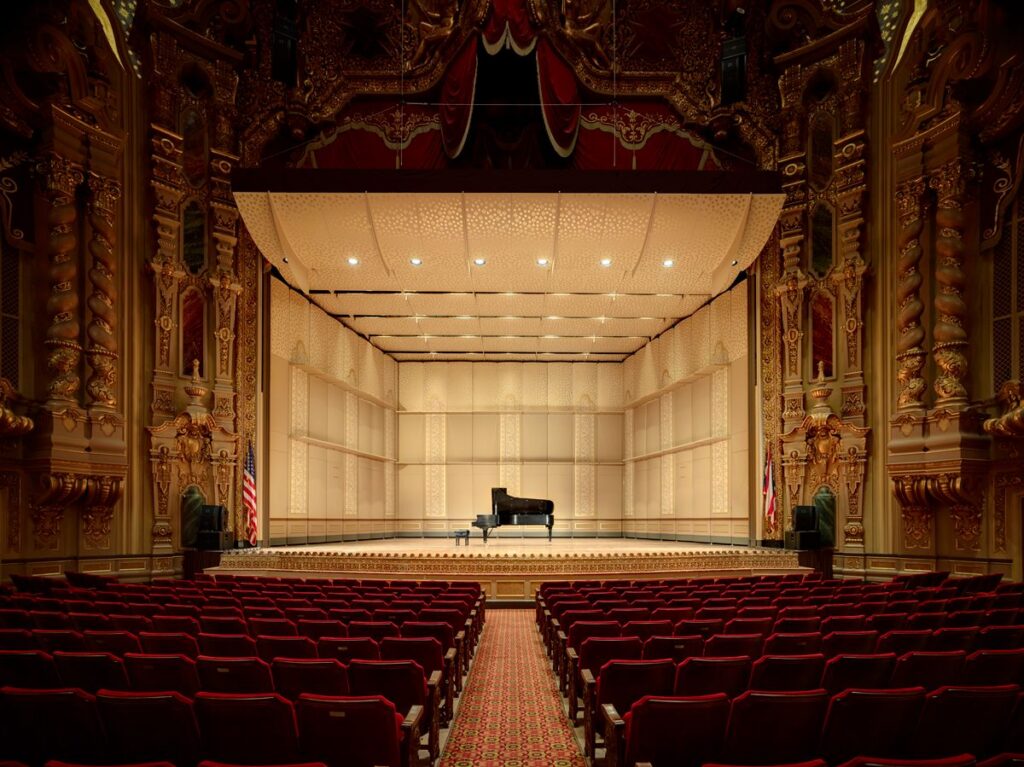
A proscenium stage is the setup you likely picture when you think of a theatre. The audience looks through a large opening — the proscenium arch — that frames the stage like a picture and separates the audience from the action. It’s the most traditional configuration, common in large performing arts centers and older theatres.
The wings and the space above the stage stay hidden, leaving room for scenery, fly systems and quick set changes the audience never sees.
Proscenium stages suit:
- Musicals and large-cast productions
- Shows with elaborate sets or backdrops
- Performances that rely on stage machinery and rigging
Pros and Cons of Proscenium Stages
Pros:
- Consistent sightlines that allow everyone to view the stage from the same direction
- Strong support for detailed set design and large scenery
- Easy to conceal lighting, rigging and backstage areas
Cons:
- Greater distance from the audience and less intimacy, especially in the back rows
- A single viewing angle that limits staging options
What are Thrust Stages?
A thrust stage pushes the performance out into the audience, with seating wrapped around three sides. A wall or scenic area usually backs the stage, but most of the action happens among the seats rather than behind an arch. It’s one of the oldest formats around. The Globe Theatre still uses this version for productions of Shakespeare plays.
Performers can get within a few feet of the audience, building a connection a proscenium can’t match. Directors also have more angles to work with, giving them production design flexibility.
Thrust stages work well for:
- Shakespeare and classical theatre
- Character-driven drama
- Intimate productions where audience proximity adds to the experience
Pros and Cons of Thrust Stages
Pros:
- Strong performer energy from playing in the middle of the crowd
- Dynamic blocking with multiple viewing angles
- Efficient use of space in smaller venues
Cons:
- Difficult sightlines across three sides
- Blocking challenges to avoid the actors’ backs
- Less room for tall scenery and big effects
What is an Arena Stage?
An arena stage, also called theatre-in-the-round, places the performance in the center with the audience seated on all four sides. There are no back walls or wings, so performers enter through seating aisles and every set piece must be viewable from any angle.
With nowhere to conceal scenery, arena productions lean heavily on lighting, furniture and smaller set pieces, and directors must keep performers moving so audience members don’t get shortchanged.
Arena stages suit:
- Intimate, immersive productions
- Shows with minimal scenery
- Performances built around strong acting and staging over spectacle
- Experimental and contemporary work
Pros and Cons of Arena Stages
Pros:
- Maximum closeness and a shared experience
- Efficient use of space
- A dynamic setup that keeps staging engaging
Cons:
- No place to hide sets, scenery or backstage elements
- Precise blocking and extra design work so every angle shows well
- Entrances and exits through the audience
What are Black Box Theatres?
A black box theatre is a simple open room, usually painted black, with no fixed stage or seating. That blank canvas is the point: a black box can be set up as a proscenium one week and an arena the next.
That flexibility makes these theatres popular for studio productions, experimental work and teaching. Schools use them for hands-on practice with staging and design; companies use them to test ideas that wouldn’t fit a traditional house. The trade-off: with no permanent infrastructure, almost everything has to be built for each show.
Pros and Cons of Black Box Theatres
Pros:
- Total configurability for staging and seating, adaptable to nearly any production
- A cost-effective option for smaller companies and schools
- An ideal environment for experimentation and training
Cons:
- Extra design and setup effort
- Limited built-in infrastructure for rigging
- Fewer options for large-scale scenery
- Smaller audience capacity than a dedicated house
Theatre Rigging Solutions from Tiffin Scenic Studios
The right stage configuration is only the start. Turning a design into a working venue takes rigging, staging and equipment built to fit the space. That’s why it’s essential to work with an experienced team.
Tiffin Scenic Studios has spent decades designing and installing custom theatre and stage rigging equipment for venues of every size. We handle design, installation and safety inspections for new construction and renovations alike, so your stage is ready for performances and safe for the people who work on it.
Ready to get started? Contact our team to talk through your project and schedule a consultation.