

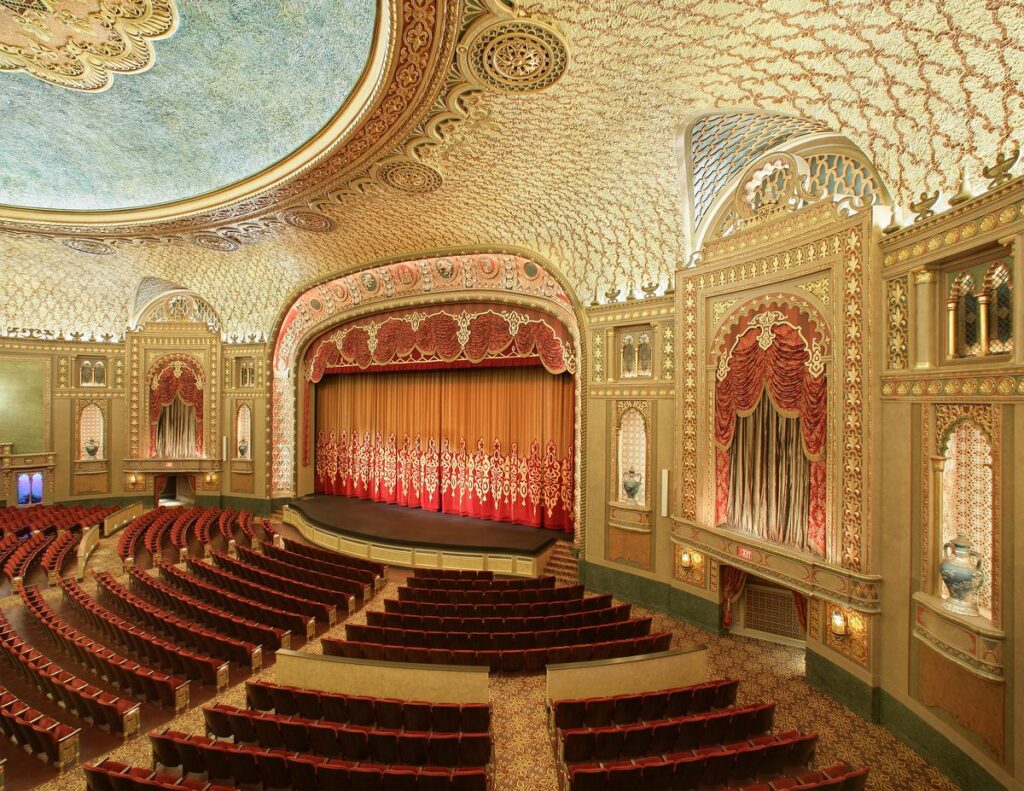
Historic theatres are often cultural icons for the communities that surround them. The lighting, drapery and architecture combine to create a unique ambience that transports audiences into the world onstage. But when those older structures need updates to accommodate modern productions, striking a balance between preserving the past and adapting to the future can be tricky.
Outdated structural systems pose compliance and safety risks, so retrofitting rigging for historic theatres is often necessary.
This article is your guide to understanding and navigating the process while maintaining the magic of your performance space.
Why Historic Theatres Need Rigging Retrofitting
Historic theatres – especially those built in the early 1900s – may still rely on hemp rope rigging and manual counterweight systems. Those arbors, locks and tracks have undergone decades of wear and likely don’t meet today’s ANSI standards for performance spaces. And if ownership has changed hands several times since the theatre’s founding, there may be inconsistencies in maintenance, upgrades and the documentation that accompanies both.
Retrofitting can resolve those issues without demolishing and reconstructing a theatre’s original architecture. That’s because you’re working on the underlying structure that controls the stage equipment with minimal impact on the cosmetic design.
You may need to consider retrofitting your stage rigging if you notice:
- Frayed or discolored hemp rope
- Corroded wire rope
- Worn or cracked sheaves and blocks
- Sticking line sets
- Uneven tracks
- Outdated load ratings
- Missing system documentation
- Makeshift repairs
- Noisy operations
How to Balance Safety Requirements with Preservation
Retrofitting may seem to compete with preserving the original design of your historic theatre, but the two can coexist. Because rigging is mostly housed out of sight backstage or overhead, you can still modernize those features without sacrificing the ornamental touches that evoke a sense of nostalgia and grandeur.
If your project involves federal funding, tax credits or permits, you’ll need to follow:
- Secretary of the Interior’s Standards for the Treatment of Historic Properties under the National Park Service: These standards define four treatments for historic properties: preservation, rehabilitation, restoration and reconstruction. Rigging retrofits typically fall under rehabilitation.
- Section 106 of the National Historic Preservation Act: These guidelines require federal agencies to consider how your project affects a historic property. It applies only when a project involves federal funding, permits or licenses.
Safety standards often drive the need for a retrofit, so it’s important to remember the following if you plan to make structural changes:
- Hire a qualified rigging engineering team to conduct assessments before installation.
- Review and adhere to OSHA’s rules for rigging safety.
- Design and maintain systems that meet ANSI E1 entertainment technology standards.
- Confirm your design meets local building and fire codes.
- Contact local building officials and fire marshals to verify permit and inspection
Rigging System Options for Historic Theatres
Manual counterweight conversion: You can swap hemp rope and sandbags with counterweight arbors to reduce the amount of manual labor and improve rigging load capacity. You will need adequate wall space and height for arbor travel to accommodate the tracks.
Motorized rigging: This option can replace some or all of the manual components used in historic theatre rigging. Motorized rigging eliminates the need for arbors and rails and provides precise, programmable movements and safety features. Typically, motorized hoists can be mounted out of sight so you can preserve historic fly galleries while accommodating heavier or more frequent load changes.
Tension wire grids: This walkable overhead surface spans the width of the stage below, allowing technicians to access lighting and rigging from above. You can use tension wire grids in smaller stage houses without a fly system.
Pipe grids: You can use these flexible networks of pipes to mount lights, speakers and scenery. It’s a good option for smaller historic theatres without requiring too many connection points. That prevents pipe grids from interfering with the original support system.
Planning a Rigging Retrofit Project
Structural assessment: Work with a rigging team experienced in historic theatres is a must. They will have the expertise to effectively evaluate your space’s structure, identify obstacles and review original floor plans and previous alterations. You’ll also need to compare the existing system with the new blueprints and supply that information to preservation agencies.
Preservation board and architect review: You’ll need to bring your structural assessment findings before a preservation board and architect. They will identify defining features that must be protected and where you have room to implement retrofitting. You must be able to explain how your new design follows the rehabilitation category set forth by the Secretary of the Interior’s Standards for the Treatment of Historic Properties.
Installation: As with your structural inspection, it’s crucial to hire rigging installers who understand the intricacies of working in historic buildings. You’ll also have to consider how to work around your venue’s performance and event calendars. Document historic elements that must be preserved and those that will be removed or salvaged.
Maintenance: Once your new rigging is in place, implementing a consistent maintenance schedule will help extend its lifespan. That includes completing visual inspections before and after performances, scheduling a professional review every year and budgeting for short- and long-term upkeep.
Partner with an Experienced Rigging Supplier
Tiffin Scenic Studios has worked with a variety of historic performance venues across the United States, including the Ohio Theatre in Columbus, Ohio, the Tennessee Theatre in Knoxville, Tennessee, and Orpheum Theatre in Sioux City, Iowa. We offer comprehensive design, installation and inspection services to ensure your retrofit project is completed on time and on budget. Contact us to learn more about our capabilities.